Studley Revealed - Fountains Abbey & Studley Royal
North Yorkshire, UK
2018-Ongoing
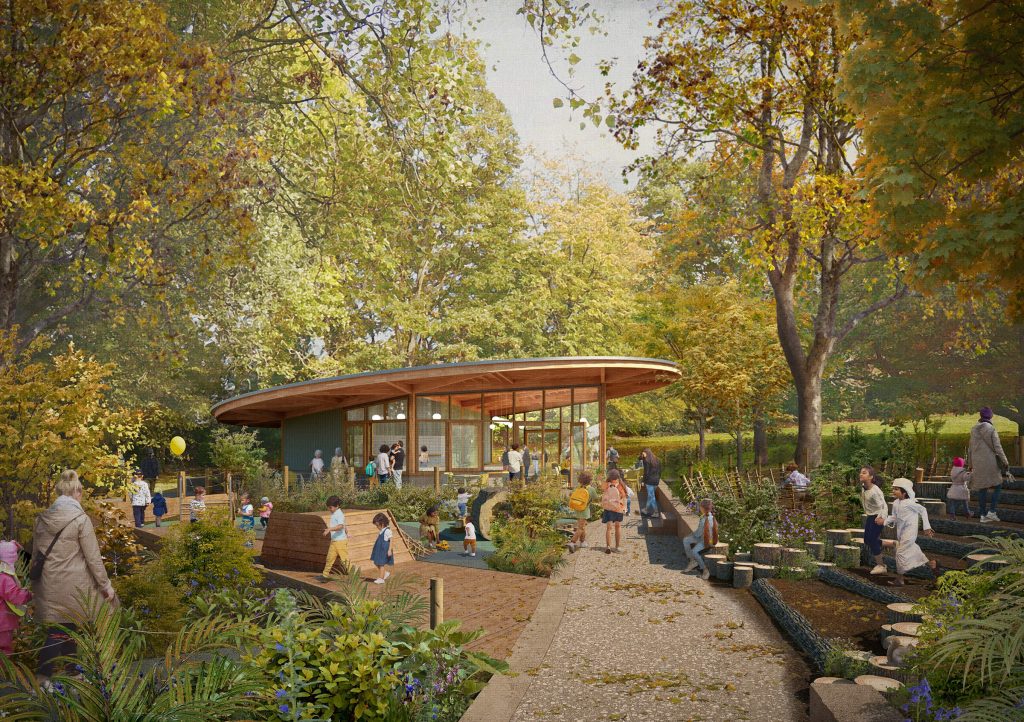
Studley Revealed reimagines the historic Canal Gates at Fountains Abbey and Studley Royal, reconnecting an 18th-century masterpiece with its original landscape. Through careful conservation of the Grade-II listed Tea Room and a new, sensitive extension, the project restores lost sightlines, revives the garden’s spatial order, and creates accessible visitor facilities. Working closely with the National Trust, Rankinfraser, and a skilled design team, the scheme blends architecture and landscape into a single, considered composition that honours history while welcoming visitors for centuries to come.


A Living World Heritage Landscape
The Canal Gates once formed the formal arrival to John and William Aislabie’s Georgian water garden, part of today’s UNESCO World Heritage Site of Fountains Abbey & Studley Royal and the Nidderdale AONB. Beyond lies the deer park with red, fallow and sika deer and ancient groves of lime, oak and chestnut. The water garden itself orchestrates long, borrowed views to the abbey and Surprise View. Over time, arrivals shifted to the rear Visitor Centre, leaving the Gates diminished in meaning. The project restores this threshold, reuniting the deer park and garden, and reinstating the Georgian sequence at its true entrance.


Restoring the Historic Frame
Generations of incremental change had blurred the coherence of the Canal Gates. Views were blocked, structures intruded, and original alignments became unreadable. The design process began with careful study of historic maps, drawings and accounts to rediscover the geometry and intent of the garden. The oval forecourt is reinstated, tree-lined walks such as the Balustrade Walk are strengthened, and bosquet hedges once again frame sightlines that had been lost. Hardscape materials follow the historic hierarchy of the site, from York stone flags to sawn setts, repairing the Georgian framework while blending resilient planting suited to a changing climate.
-
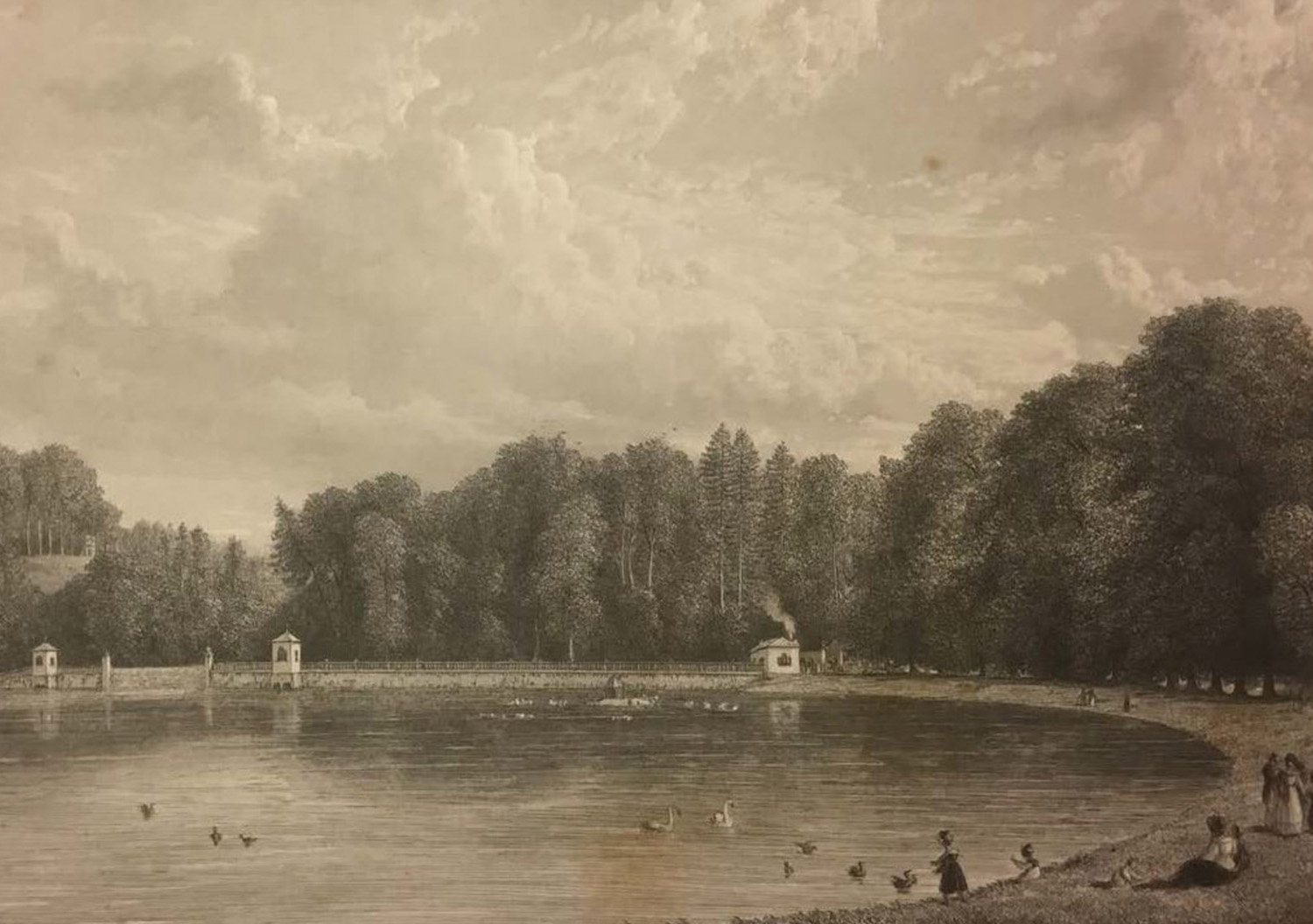 Studley Royal Park Antique Print
 -
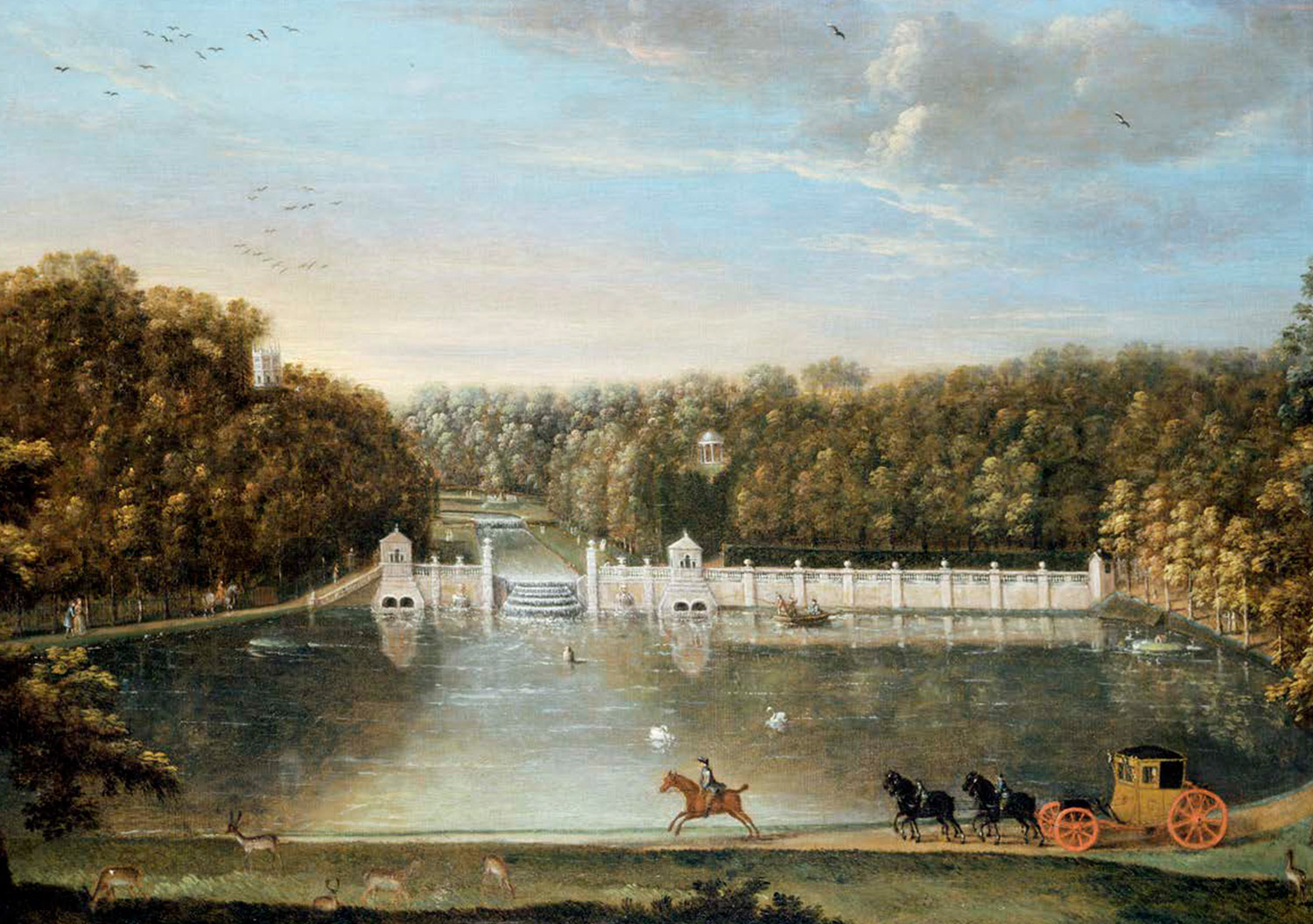 The Dam and Fishing Tabernacles with the Octagon Tower and Rotunda at Studley Royal, Balthasar Nebot


-
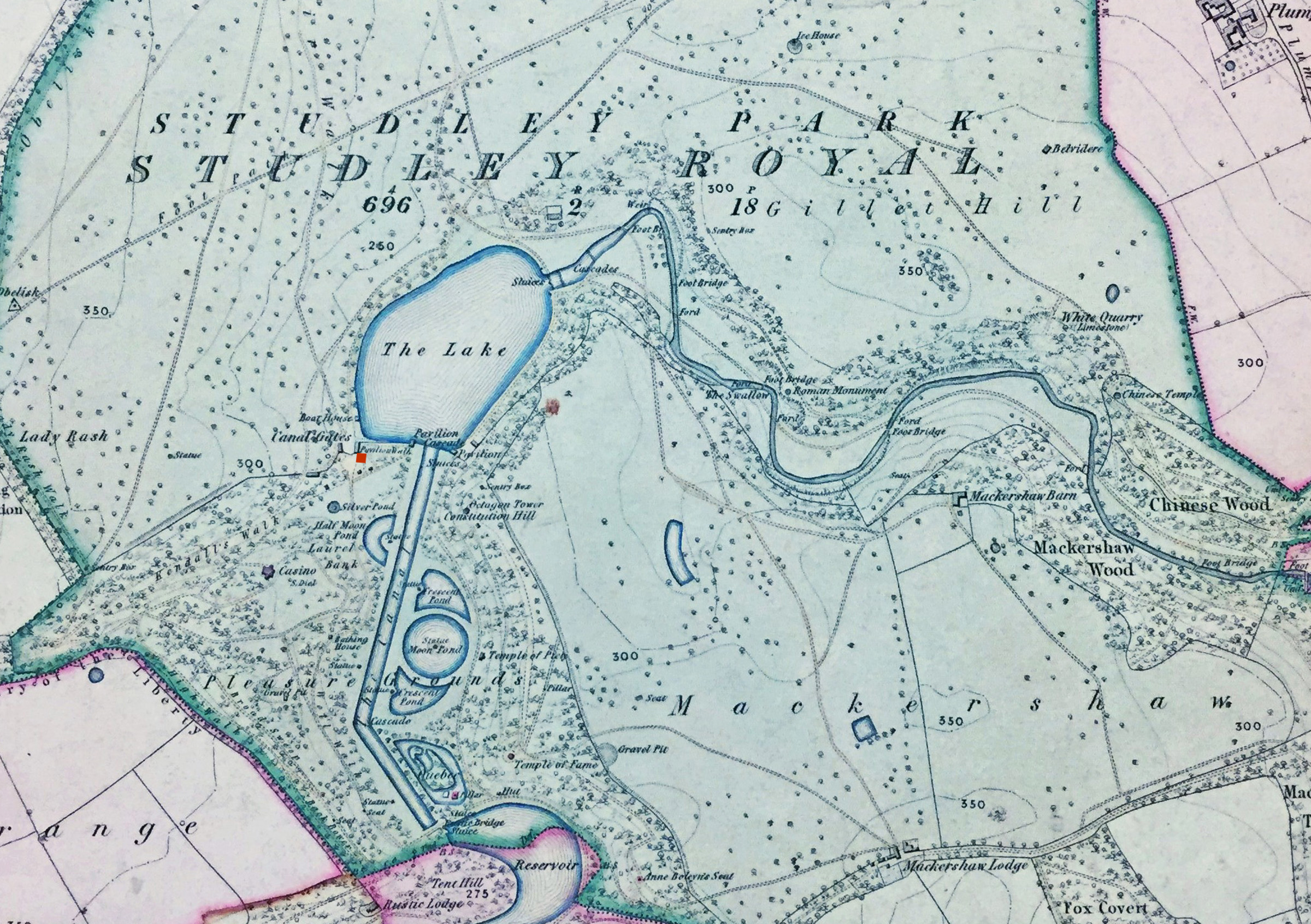 Historic park map


A Quiet Contemporary Addition
At the heart of the scheme is the conservation of the Victorian Lodge and a single-storey extension providing an enlarged tearoom, interpretation space, and accessible facilities. Simple in form, built from timber and brick with a green roof, the new wing sits low in the landscape, respecting historic alignments and framing key views. Planting weaves the building into its setting: a green roof of thyme, juniper, and sedum attracts pollinators, while tiered shrubs and climbing plants add texture, scent, and seasonal colour. Integrated sustainable measures, including glulam timber, reduced concrete foundations, air-source heat pumps, and natural ventilation, ensure the architecture remains light in touch and low in carbon.


Access and Inclusion
Studley Revealed enhances legibility and accessibility at this historic entry point while retaining the main Visitor Centre access. Original garden paths are restored, entrances clarified, and facilities made fully accessible. Clear links to the wider estate remain for walkers, cyclists, buses, and cars. New planting and surfaces ensure calm, uncluttered movement. This renewal shows how contemporary design can make heritage landscapes more inclusive and welcoming for future generations.


Project Information
Client: National Trust
Location: North Yorkshire
Sector: Heritage
Commissioned: 2018
Status: Stage 4
Budget: £3.5 million
GIA: 500sqm
Team
Landscape Architects: Rankin Fraser
Structural Engineers: Structure Workshop
M&E Engineers: Max Fordham
Civil Engineers: Hodel
Selected Press
April 2025, Chloe Laversuch, ‘Fountains Abbey improvements to go ahead’, BBC
Related Projects