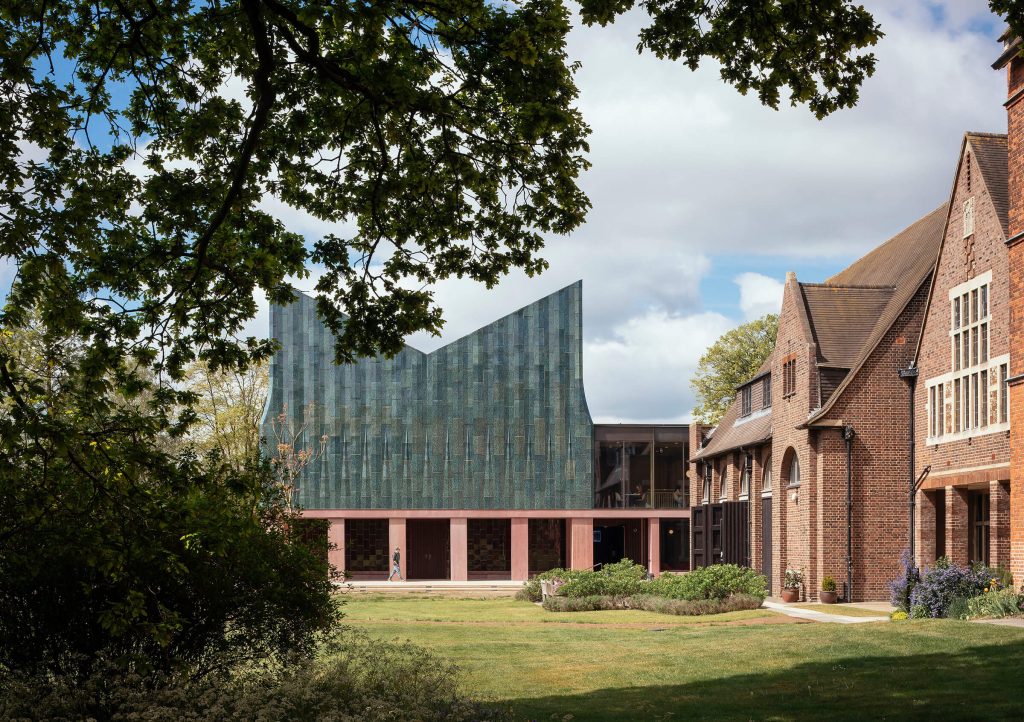
Green Templeton College
Oxford, UK
2017-Ongoing
Feilden Fowles’ plans for a mixed-use development for Green Templeton College (GTC), University of Oxford improve its main accommodation, academic and social facilities, while continuing to decarbonise its estate. The primary aims of the development are to enhance facilities for students and the wider GTC community on the central college site, including provision of high-quality student study bedrooms, an enhanced entrance and porters’ lodge, doubling dining capacity and much needed student study space. The proposals embody GTC’s ethos of ‘making the world a better place to live in’ contributing positively to the sustainability of the College estate and to the architectural heritage of Oxford.


Site
Green Templeton College is a graduate-only College located at the heart of Oxford University’s emerging centre of gravity. This area, now called the Radcliffe Observatory Quarter (ROQ), benefits from the proximity of the Observatory Tower, which offers an important landmark that marks the ROQ in Oxford city centre and gives it local distinctiveness.
As a graduate-only College aiming to set a new Oxford standard for postgraduate education, GTC provides a friendly and supportive environment for postgraduate and research students, where they can focus on their studies as well as pursue other sporting, cultural and social interests in the company of their peers. It is a remarkably diverse and lively international student body: currently more than 60% of students come from countries outside the UK.


Observatory, Sightlines and Elevation
Green Templeton College does not conform to the pattern of many of the older Colleges of regular interconnecting quads. Its origins were not medieval nor collegiate, but more a country house set within parkland. The Observatory building, by its very purpose, determines an orientation


The chimneys of the main dining hall relate to the scale of the Observatory drum, the main mass relates to the Observer’s house roof, whilst the kitchen block matches the Observer’s house parapet height. Finally the link wall and single storey aedicules relate to the scale of the garden and its surrounding wall.


Brick to Stone
As per the shifts between brick and stone in the surrounding garden wall, the masonry facades of the proposed vary in their material cladding. Headington stone is introduced in the ground floor facades of all three accommodation buildings to create a continuous datum encircling the garden that corresponds with the height of the historic wall. Above, the masonry unit reduces to a more domestic scale, roughly laid with thick mortar joints to mirror the irregularity and rich texture of the historic wall. The buff tones of the proposed stone and clay will marry the existing colour palette of the existing College buildings.


Passivhaus
The approved scheme will be built to Passivhaus Standard and reduce the site-wide carbon emissions.


Garden Cafe
This new building will have an important role in providing a functional and informal communal space for students. It will connect both inside and outside allowing the gardens to be enjoyed by the College community and its visitors. It is located on the site of a modern greenhouse, which it replaces, yet borrows from its distinctive form and character, nestling against the handsome historic kitchen garden wall.


Project Information
Client: Green Templeton College
Location: Oxford
Sector: Education, Residential
Commissioned: 2017
Status: Planning Permission Secured
Budget: £12 million
GIA: ????
Team
????
Selected Press
25 January 2024, Richard Waite, ‘Feilden Fowles’ Oxford student homes and dining hall approved‘, Architects’ Journal
17 January 2024, Tom Lowe, ‘Feilden Fowles’ plans for Oxford college redevelopment poised for approval‘, Building Design
Related Projects