Mansfield College
Oxford, UK
2023-Ongoing
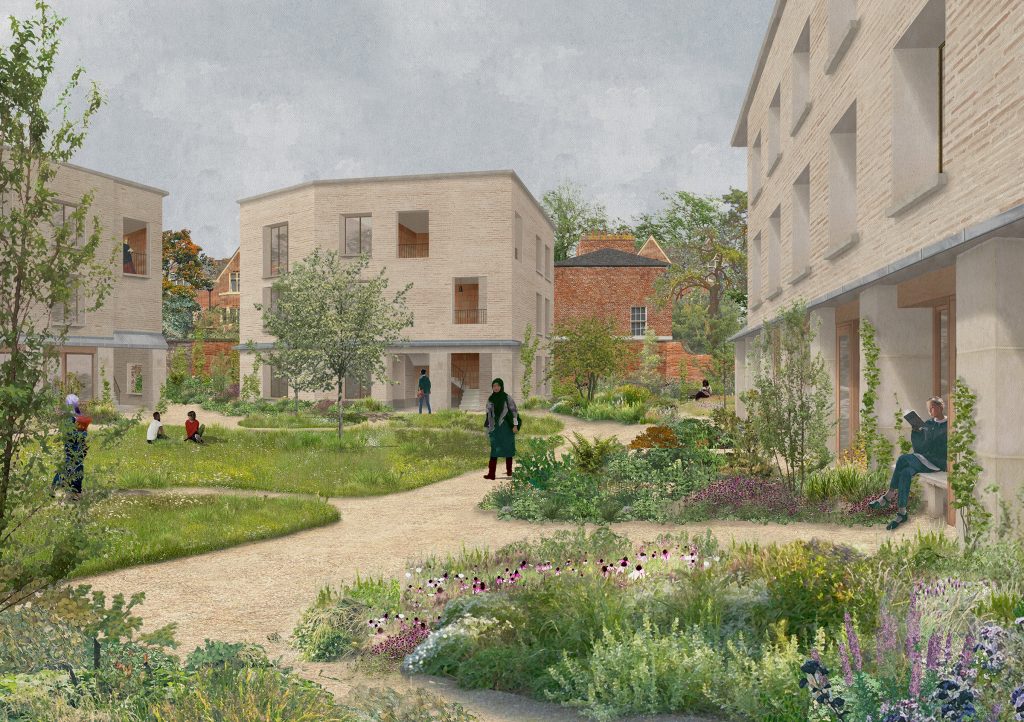
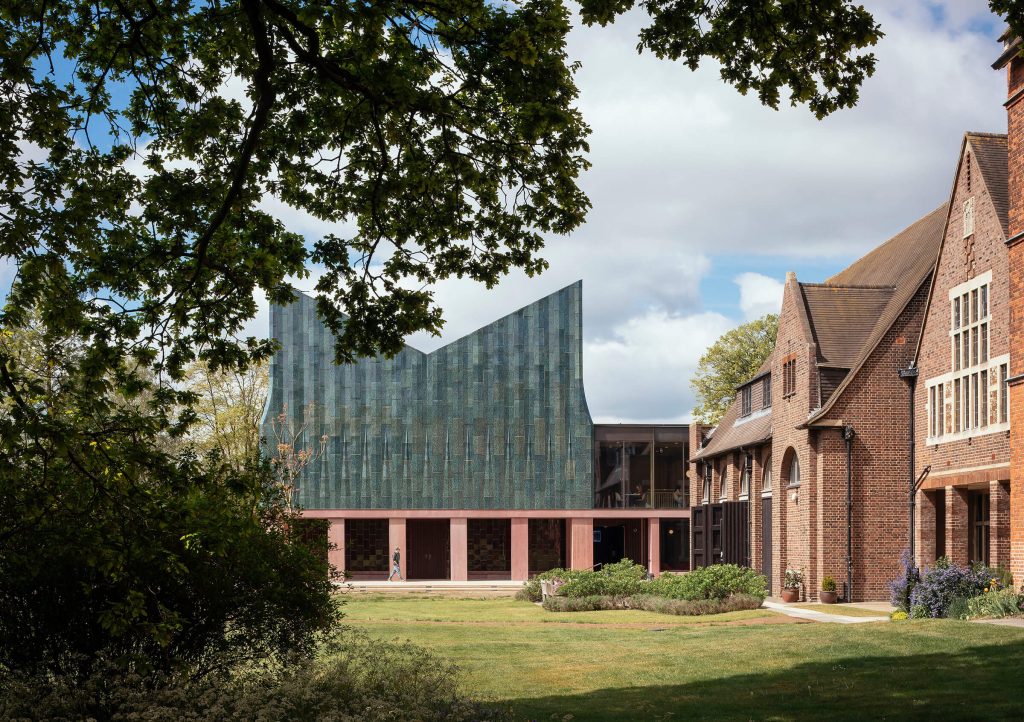
Founded in Birmingham and established in Oxford in 1886, Mansfield College was created to educate nonconformist ministers, welcoming all denominations and those excluded from the University’s religious life. Its inclusive ethos endures through a leading outreach programme supporting students from diverse socio-economic backgrounds, most from state schools. The Hands Building, home to the Bonavero Institute of Human Rights, embodies Mansfield’s founding principles of freedom, inclusion, and equitable access to education.


Mansfield College
Founded in Birmingham and established in Oxford in 1886, Mansfield College was created to provide education and theological training for nonconformist ministers, offering a home for those excluded from the University’s religious life while welcoming all denominations. That inclusive spirit endures through its leading outreach programme, which supports students from diverse socio-economic backgrounds, most from state schools. The College’s newest building, the Hands Building – home to the Bonavero Institute of Human Rights – embodies its founding values of freedom, inclusion, and educational access.


-
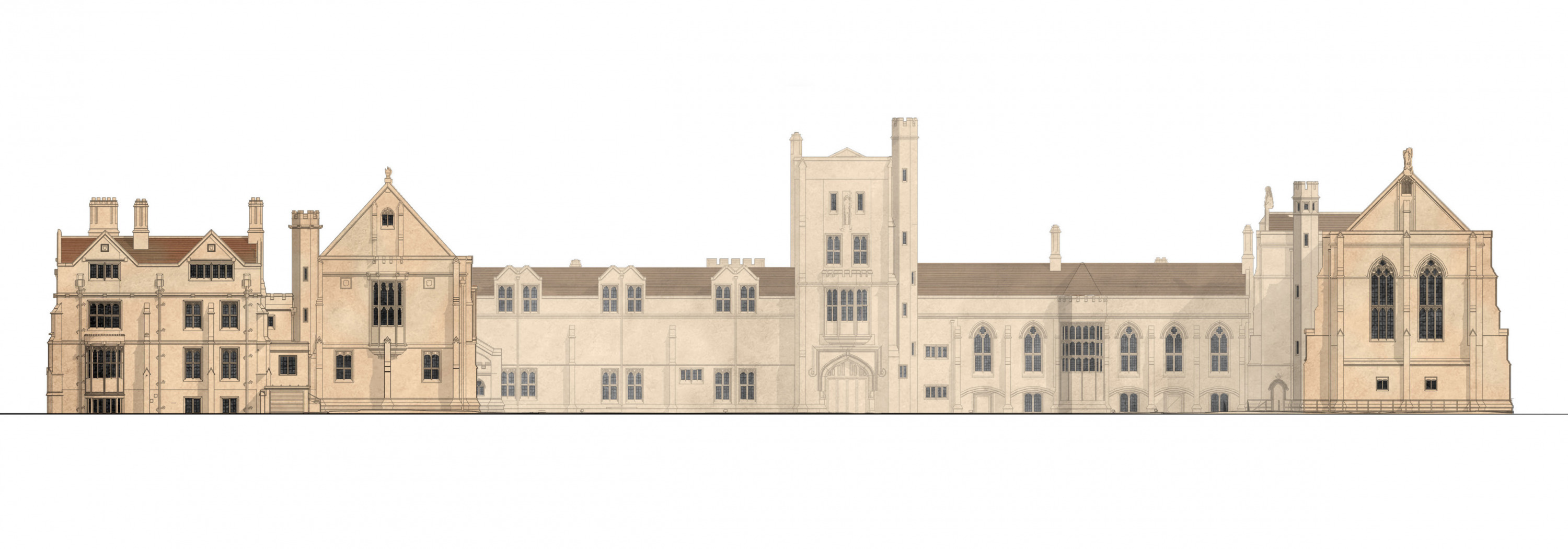 Champneys building

Design Approach
Landscape and buildings, old and new, converge to form a generous threshold between the City and the College. The new Porters’ Lodge faces Basil Champneys’ chapel across informal planting, framing a view of the North Quad and creating a sheltered space for both the College and the public. The proposed entrance is marked by a sensitively formed stone tower, watching over Mansfield College like a protective guardian. The Lodge is conceived as a confident addition to the city skyline and participates in Oxford’s long tradition of gatehouses and entrance towers, forming a positive and meaningful contribution to the rich urban fabric of the city.
-
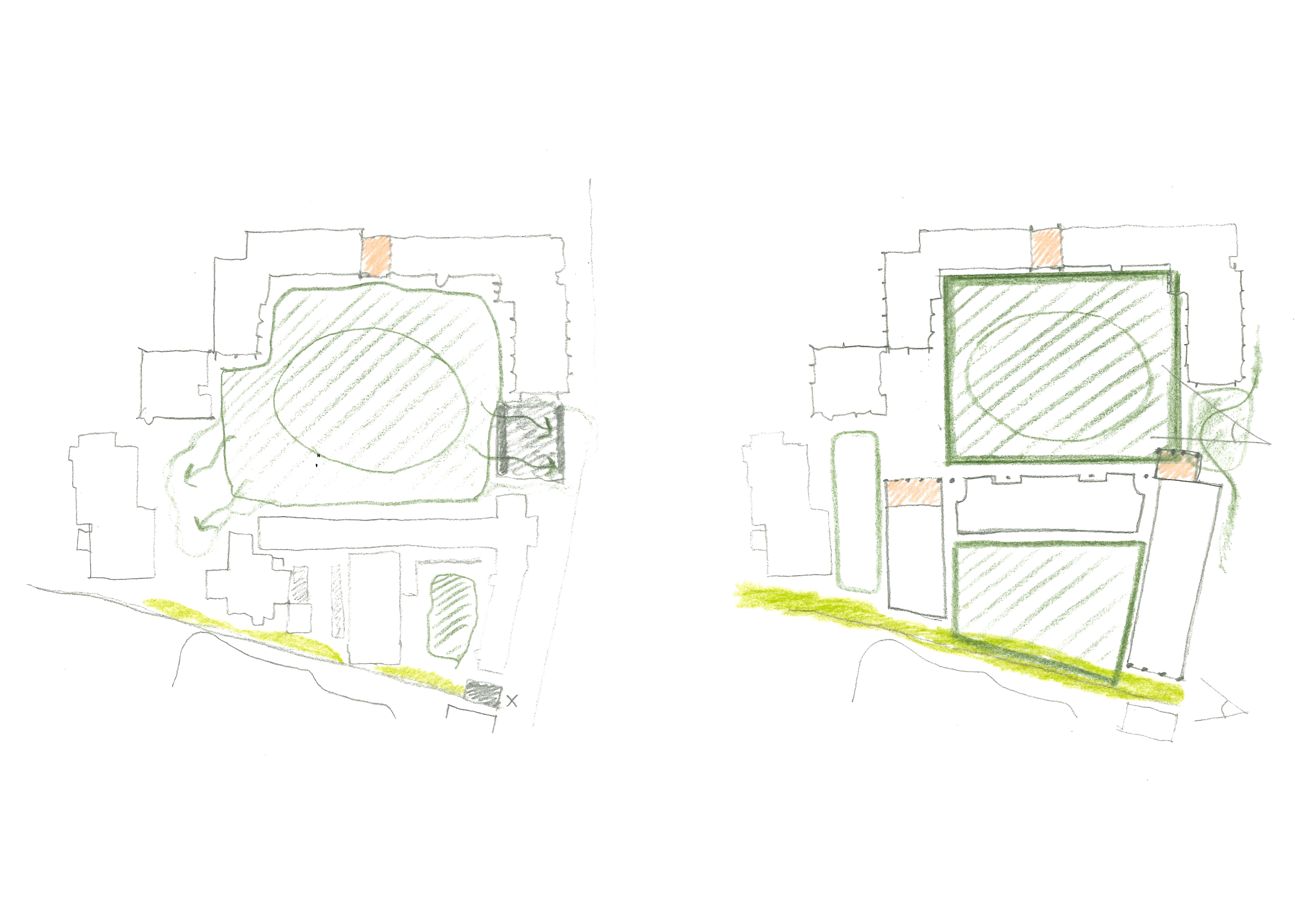 Existing and proposed development sketches

-
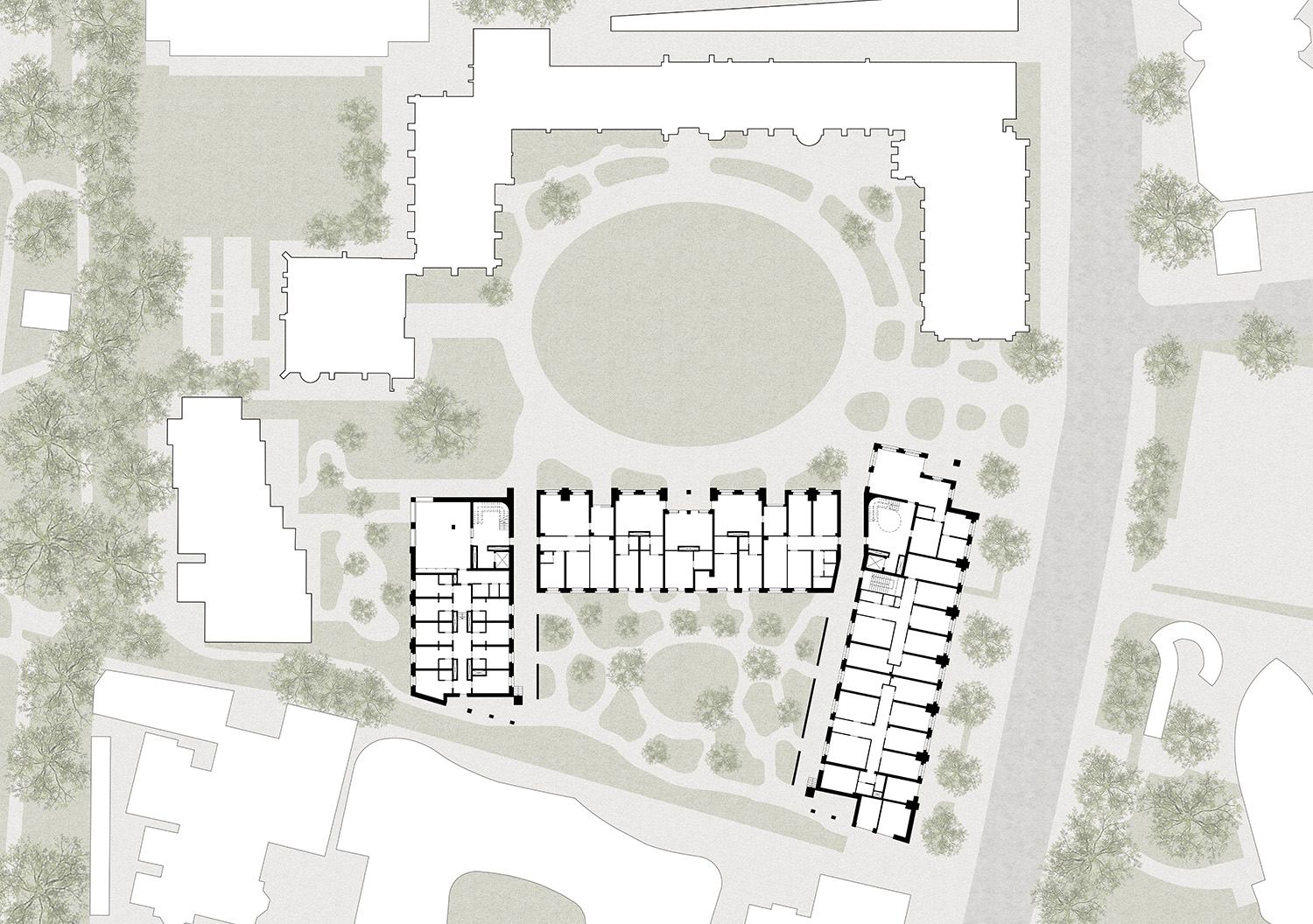 Proposed student accommodation and porter's lodge - ground plan
 -
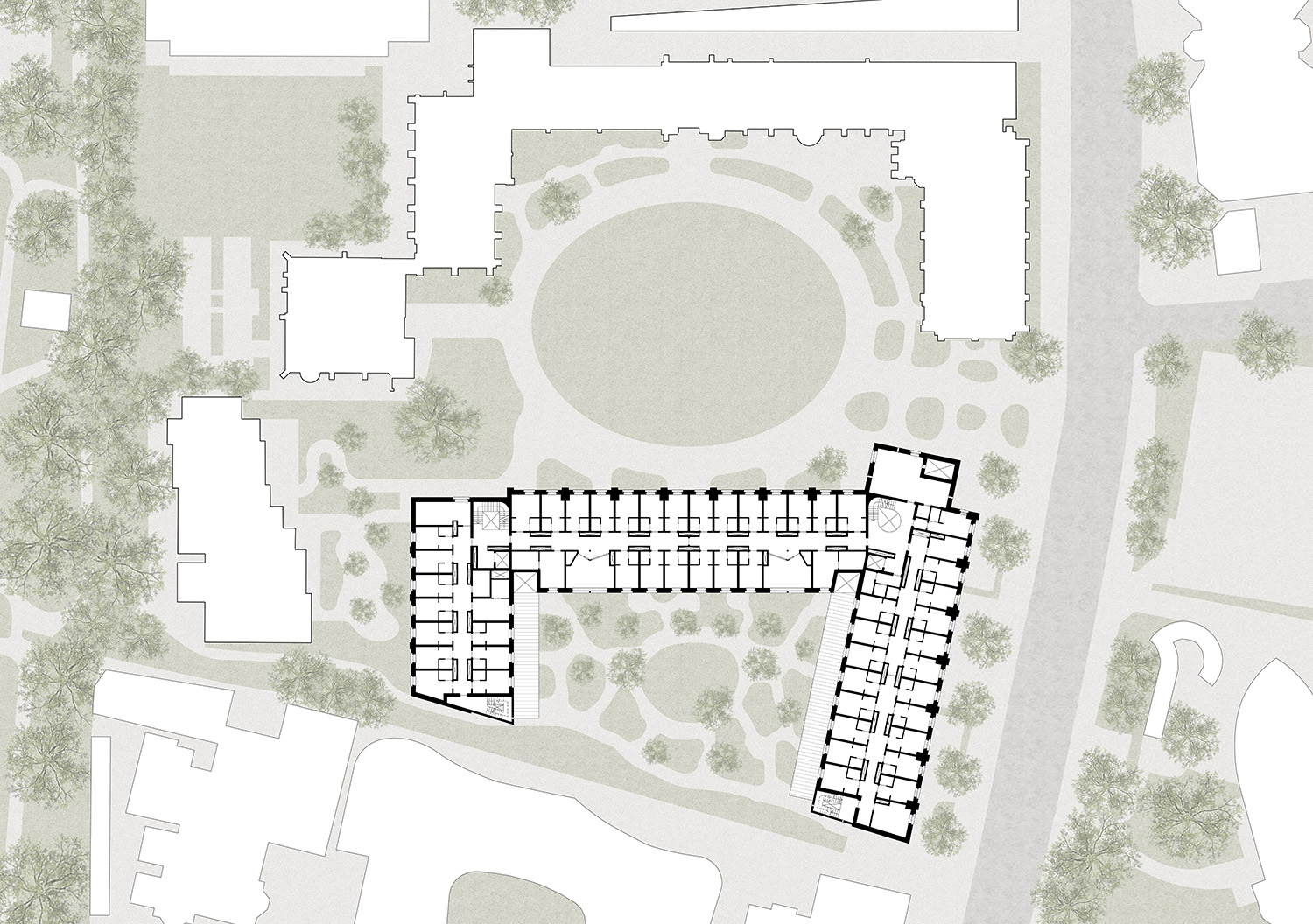 Proposed student accommodation and porter's lodge - first plan
 -
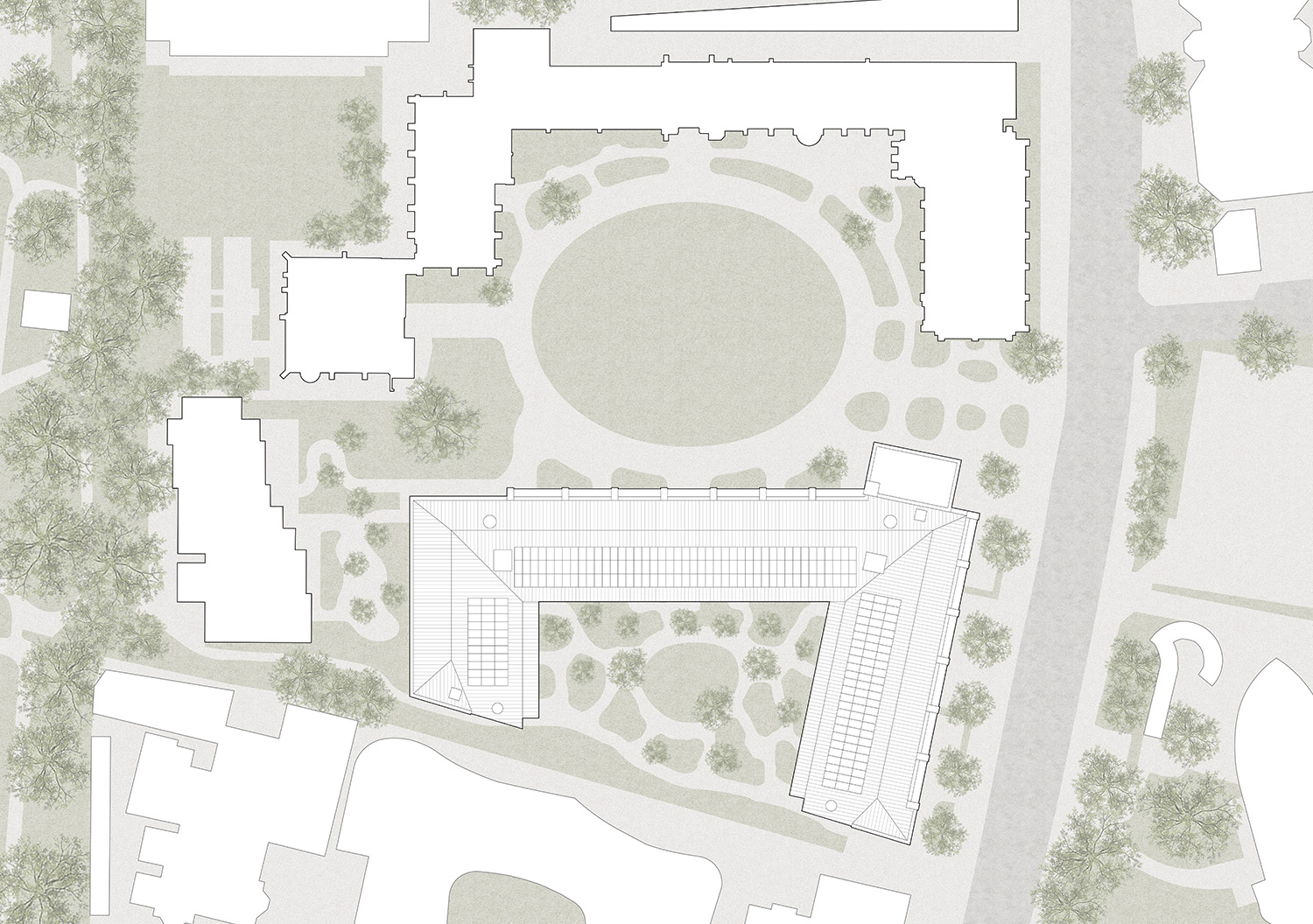 Proposed student accommodation and porter's lodge - roof plan


Learning from Champneys
In contemplating an architectural language for a new building to sit comfortably in its context, much energy has been dedicated to the examination of the work of Basil Champneys – architect of not only Mansfield College’s impressive North Range, but of many other important institutional buildings. His is an architecture governed by principles of disciplined proportion and architectural grammar, but executed with humour and playfulness, where the prevailing order of things is permitted to dissolve in moments of contained disobedience, to delightful effect. The proposed South Range seeks to emulate the measured confidence of Champneys’ work in a way that is not imitative, but loosely referential.


-
 Material reclamation

South Quad
The proposed South Quad is envisioned as a more informal, garden-like counterpart to the ordered character of the North Quad. Its loggias – with a robust stone base, slender metal columns and a finely crafted timber roof – draw from Oxford traditions while expressing their own distinctive identity. A lightness in structure and material defines both the Quad and the South Range, creating clear front and back conditions that respectfully echo the compositional discipline of Basil Champneys’ architecture. Sweeping, curved double-height spaces introduce abundant natural light into the passages softening the junction between landscape and building.

-
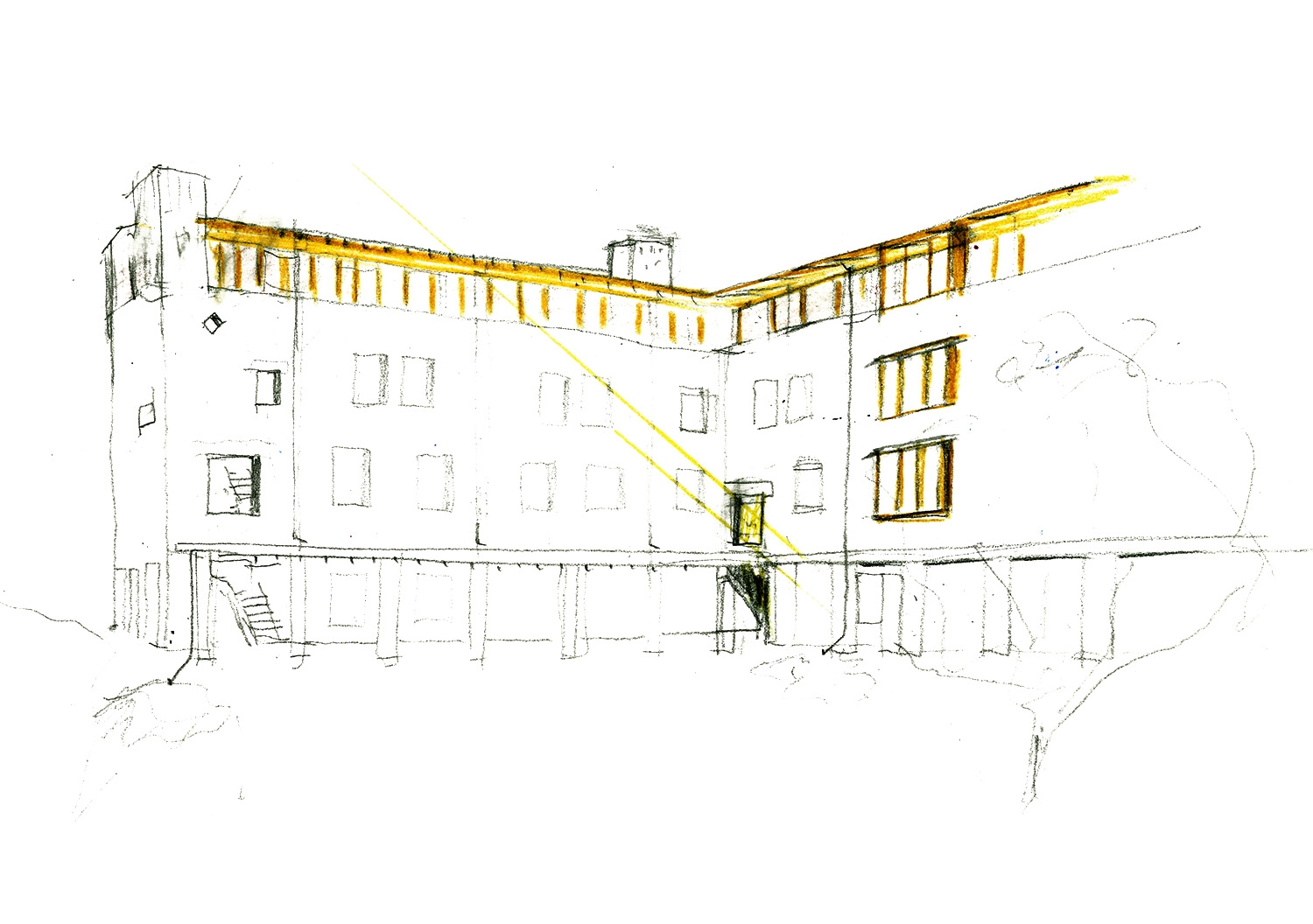 South quad sketch

Material Reclamation
Following an extensive reuse study, the John Marsh Building will be carefully deconstructed to enable the site’s renewal. Wherever possible, building stone will be reclaimed for use in the new South Range, embedding the material history of the site into its future fabric. Selected decorative fragments will be thoughtfully repurposed within the new design, offering a subtle and enduring memory of the building that once stood there.


Project Information
Client: Mansfield College, Oxford
Location: Oxford
Sector: Education, Heritage, Residential
Commissioned: 2023
Status: Ongoing
GIA: South Range – 7500sqm, North Range – 2800sqm
Team
Related Projects